beerreviewsandmore.com
Zywiec Baltic Porter
Imported Polish Porter
IMPORTED BEER
Vince Kozlo
5/4/20264 min read
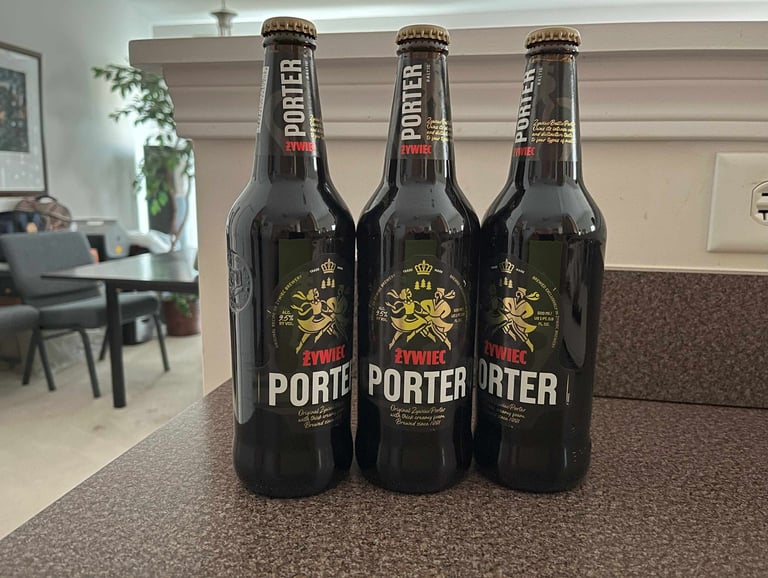
The Brewery Behind Żywiec Porter:
The story of Żywiec Brewery begins in 1856, when it was established by Archduke Friedrich Habsburg in the Żywiec Valley of southern Poland. Brewing traditions in this region stretch back to the Middle Ages, but the Archduke’s brewery formalized and industrialized production, setting a new standard for quality and scale. From its earliest decades, the brewery emphasized consistency, craftsmanship, and the use of natural ingredients—principles that helped it expand rapidly. By 1913, exports already accounted for over 20% of production, signaling the brand’s early international ambition.
The brewery endured immense historical upheaval, including both World Wars and Poland’s shifting political landscape during the 20th century. Despite these disruptions, it survived and eventually modernized, emerging in the 1990s as one of Europe’s more advanced brewing facilities. ([ZywiecUSA][1]) Over time, the company became part of Grupa Żywiec, now owned by the global brewing giant Heineken. This ownership brought significant investment in technology, quality control, and global distribution while maintaining traditional Polish brewing identity.
In terms of employee relations and corporate philosophy, Żywiec has long positioned itself as a steward of both people and place. It has historically supported cultural initiatives (such as music events and arts patronage), reinforcing its role as more than just a beer producer. ([Druga strona Ż][3]) Sustainability and environmental stewardship are embedded in its identity: the brewery emphasizes natural ingredients—barley malt, hops, and mountain water—and operates in a region where clean water and forested landscapes are central to both branding and production. ([Druga strona Ż][4]) While detailed ESG metrics evolve with its parent company, the brewery’s long-standing narrative ties its success to environmental purity and responsible resource use, reflecting both tradition and modern sustainability expectations.
Żywiec Porter:
Origins and Style
Żywiec Porter traces its roots back to 1881, when the first barrels left the Archduke Brewery. ([Druga strona Ż][4]) It belongs to the Baltic Porter style—a unique hybrid that differs from British porters by using lager yeast (bottom fermentation) rather than ale yeast. ([The Liquor Barn][2]) This gives it a smoother, cleaner fermentation profile despite its strength. At 9.5% ABV, it sits firmly among the stronger traditional European dark beers.
The beer’s recipe has remained remarkably consistent for over 140 years, a rarity in modern brewing. It reflects a time when porter styles migrated across Europe and were adapted to local tastes and brewing methods—particularly in the Baltic region, where colder climates favored lager fermentation.
Malt and Hops
Żywiec Porter derives its complexity from **four types of barley malt:
Munich malt
Pilsner malt
Caramel malt
Roasted malt
This layered malt bill creates the beer’s deep color and rich flavor. The hops used are described broadly as high-quality aromatic hops, contributing subtle bitterness rather than dominating the profile. ([Half Time][5]) The balance is clearly malt-forward, with hops acting as structure rather than centerpiece.
Glassware:
A snifter or tulip glass is ideal.
Why:
These shapes concentrate aroma, allowing the complex malt and alcohol notes to rise. A nonic pint can work, but it won’t showcase the aromatics as effectively.
Serving temperature:
Around 50–55°F (10–13°C). Too cold, and the beer feels muted and overly crisp; warmer temperatures reveal its layered sweetness and depth.
This is not a “refreshment beer”—it’s a contemplative one.
Appearance
Pouring Żywiec Porter is like watching ink spill into glass. It emerges deep mahogany to nearly black, often opaque, with a tan to chestnut head that may dissipate relatively quickly. ([Beer of the Day][6]) Subtle reddish highlights appear when held to light, hinting at its malt complexity.
Aroma
The nose is unmistakably malt-driven:
Molasses and dark caramel
Coffee and cocoa undertones
Dark fruit notes like prune or black cherry
A faint alcoholic warmth
Reviewers often note how the aroma evolves as the beer warms, becoming richer and more expressive.
Taste:
The first sip is deceptive. When cold, it feels relatively crisp—almost restrained. But as it warms:
Mid-palate: Rich caramel sweetness and roasted malt
Secondary notes: Coffee, chocolate, and hints of licorice
Finish:
Warming alcohol with balanced bitterness
The hallmark is balance: despite its strength, the alcohol integrates smoothly rather than overpowering.
Mouthfeel and Overall Experience
Żywiec Porter is full-bodied and smooth, with a slightly heavy mouthfeel typical of Baltic porters. It coats the palate without becoming syrupy. As it warms, the beer “opens up,” revealing layers that make it ideal for slow sipping.
The experience evolves over time—arguably its greatest strength. It’s a beer that rewards patience, shifting from crisp to complex within the same glass.
Nutritional Information (Approximate)
Per 100 ml:
Calories: Carbohydrates: Protein: Fat: ABV: IBU
~83 kcal 6.6 g 0.7 g 0 g 9.5% –45
IBU:Moderate (generally around ~45, inferred from style and “slightly hoppy” profile).
Food Pairings:
Żywiec Porter excels at pairing due to its depth:
Hearty Dishes Casual Dining Cheese Pairings Desserts
Smoked brisket Burgers with fries Fontina Dark chocolate cake
Game meats Grilled sausages Aged gouda Tiramisu
Barbecue ribs Pizza Camembert Chocolate mousse
The beer’s sweetness and roast complement both savory umami and rich desserts.
Final Assessment:
Żywiec Porter stands as one of the most enduring examples of the Baltic porter style—a beer that bridges tradition and accessibility. Its strengths lie in balance, historical authenticity, and evolving complexity. While it may lack the extreme intensity of some modern craft interpretations, it compensates with elegance and drinkability.
Overall Score:
96/ 100
It’s not just a beer—it’s a living artifact of European brewing history, still relevant, still satisfying, and still quietly exceptional.