beerreviewsandmore.com
The Evolution of the Beer Can: Materials, Sizes, and the Influence of Consumer Habits
When beer first found its way into metal cans in the early twentieth century, the innovation was not merely about novelty—it was a response to changing technology, economics, and consumer lifestyles.... Click to continue reading.
BEER BLOG
Vince Kozlo
4/22/20264 min read
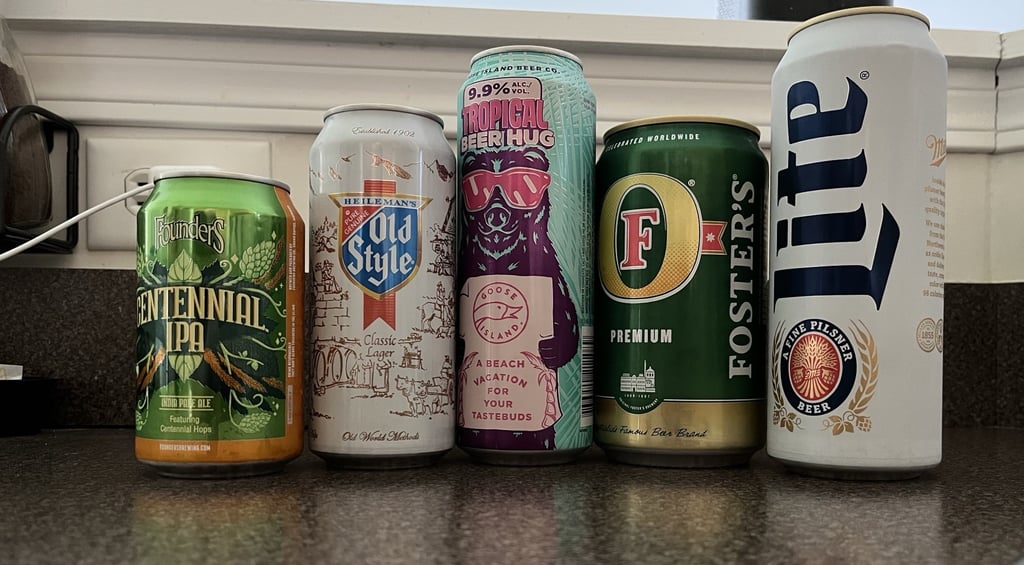
When beer first found its way into metal cans in the early twentieth century, the innovation was not merely about novelty—it was a response to changing technology, economics, and consumer lifestyles. Over nearly a century, the beer can has evolved from heavy steel containers requiring special openers into lightweight aluminum vessels offered in a wide range of sizes, including today’s popular 16‑ounce tallboys, 19.2‑ounce stovepipes, and even larger single‑serve formats. This evolution reflects not only advances in material science and manufacturing but also profound shifts in how, where, and why consumers buy and drink beer.
Early Experiments and the First Beer Cans
The concept of canned beer dates back to the early 1900s, when breweries and packaging companies sought alternatives to glass bottles, which were heavy, fragile, and costly to transport. Early attempts failed because beer’s carbonation created internal pressures far greater than those encountered in canned foods, often causing seams to burst. Additionally, untreated metal reacted chemically with beer, producing unpleasant flavors and cloudiness.
A major breakthrough came in the early 1930s after the repeal of Prohibition. Anticipating renewed demand, the American Can Company developed a steel can lined with protective coatings capable of withstanding beer’s pressure. In January 1935, the Gottfried Krueger Brewing Company became the first to sell beer in cans commercially, offering its beer in 12‑ounce steel “flat‑top” cans that required a puncturing opener known as a church key. Consumer response was overwhelmingly positive, with surveys showing strong approval and perceptions that canned beer tasted closer to draft than bottled beer.
Steel, Tinplate, and Early Design Innovations
The earliest beer cans were made from steel or tinplate and weighed several ounces each—far heavier than modern cans. While durable, these materials were resource‑intensive and expensive, and during World War II, tin became scarce and was reserved for military use. This scarcity accelerated the adoption of tin‑free steel and improved interior linings to prevent flavor contamination.
Design innovation quickly followed. Some consumers disliked drinking from flat‑top cans punctured with an opener, leading to the development of “cone‑top” or “crowntainer” cans that more closely resembled bottles and could be filled using existing bottling equipment. By the late 1930s, multiple can styles coexisted, all typically holding around 12 ounces, which soon became the industry standard. This size balanced portability, portion control, and manufacturing efficiency, and it remains the benchmark today.
The Transition to Aluminum and the Modern Beer Can
The most significant material shift occurred in the late 1950s and early 1960s with the introduction of aluminum cans. Aluminum was far lighter than steel, cooled faster, resisted corrosion, and was easier to recycle. In 1959, Coors successfully introduced one of the first aluminum beer cans, and by the mid‑1960s, aluminum had largely replaced steel in the U.S. beer market.
Another transformative innovation arrived in 1963 with the invention of the pull‑tab opening, eliminating the need for a separate opener and fundamentally changing how consumers interacted with canned beer. This convenience helped accelerate the widespread acceptance of beer cans, which by the late 1960s accounted for a majority of beer sales in the United States. From this point forward, improvement focused less on basic feasibility and more on marketing, branding, and consumer experience.
The Rise of the 16‑Ounce Tallboy
For decades, the 12‑ounce can dominated the market, but changing consumer preferences eventually created room for larger formats. The 16‑ounce “tallboy” emerged as a key alternative, offering what many drinkers perceived as a better value and a serving size equivalent to a pint. Tallboys gained popularity in bars, stadiums, and convenience stores, where consumers favored a single container that lasted longer without requiring multiple purchases.
Craft breweries, in particular, embraced the tallboy format. The taller can provided more surface area for striking artwork and helped differentiate craft beer from traditional mass‑market lagers. The 16‑ounce size also aligned well with four‑pack packaging, encouraging variety without the commitment of a full six‑ or twelve‑pack. This format reflected a broader shift toward premiumization and experiential drinking, where consumers sought quality and individuality over sheer quantity.
19.2‑Ounce Stovepipes and the Influence of Convenience Culture
In recent years, even larger single‑serve cans—most notably the 19.2‑ounce “stovepipe”—have surged in popularity. This size occupies a middle ground between a traditional tallboy and the larger 24‑ounce cans historically associated with value brands. The 19.2‑ounce format aligns closely with on‑the‑go consumption, particularly in convenience stores and gas stations, where consumers often make quick, occasion‑based purchases rather than stocking up for later.
Market data shows that these larger cans are now a major growth driver in craft beer sales through convenience channels, far outpacing older large‑format bottles. Industry analysts attribute this trend to changing shopping behaviors: consumers are making more frequent store visits, buying fewer items per trip, and favoring immediate consumption. Psychologically, buying a single $5–$7 large can feels more manageable than purchasing a multi‑pack, even when the total cost may be similar over time.
24‑ and 25‑Ounce Cans: Value, Individual Choice, and Shifting Norms
The largest common beer cans—24 and 25 ounces—have long been present in the market but have taken on new meaning in the context of changing consumer habits. Traditionally associated with value‑oriented or high‑gravity beers, these sizes appeal to consumers seeking maximum volume with minimal packaging. While not as dominant in craft beer as the 19.2‑ounce format, they remain popular in certain demographics and retail environments where single‑serve, high‑impact purchases are common.
Importantly, the growth of larger can sizes does not necessarily indicate increased overall alcohol consumption per person. Instead, it reflects a shift away from sharing and stocking behaviors toward individualized choices. Consumers increasingly want control over variety, timing, and occasion, selecting the exact product and quantity they want in the moment. Larger cans satisfy this preference by offering a complete, standalone experience without leftovers or additional commitments.
From its origins in heavy steel containers to today’s lightweight aluminum cans in a wide range of sizes, the beer can’s evolution mirrors broader changes in technology, retail, and consumer culture. While early innovations focused on overcoming technical barriers, modern developments are driven primarily by lifestyle and behavioral shifts. The rise of 16‑ounce tallboys, 19.2‑ounce stovepipes, and even larger single‑serve cans reflects a market increasingly shaped by convenience, personalization, and experiential value. As consumer habits continue to evolve, the beer can—humble yet highly adaptable—remains one of the clearest indicators of how people choose to drink in their everyday lives.